Kenya’s commitment to sustainable development is reflected in many of its key policies and strategies. As a signatory to the Zero Emissions Vehicles (ZEV) Declaration, Kenya reinforced its drive towards electromobility by pledging to achieve 100% sales of new cars and vans be zero emission by no later than 2040. This commitment catalyzed on their broader decarbonization goals, which are solidifed in their revised 2025 nationally determined contributions (NDC). They set the objective to reduce economy-wide emissions by 35% by 2030. Their NDC explicitly lists transport electrification as one of the key mitigation measures to achieve Kenya’s climate ambitions.
The transition to electromobility in Kenya can deliver significant benefits due to the low carbon intensity of its electricity mix, which in 2023 included a staggering 93% of electricity generated from renewable sources such as geothermal, hydropower, wind, and solar. From an economic perspective, electric mobility will allow the country to strengthen its energy security through a reduced reliance on expensive imported petroleum, which cost the country roughly USD $3 billion in 2021. It will also allow Kenya to shrink their national health costs—estimated at USD $937 million—by reducing the amount of ambient air pollution, which is estimated to have caused more than 3,500 premature deaths in 2024 alone. A recent study further found that the electrification of the transport sector –among other clean vehicle policies- could help its capital city, Nairobi, avoid 3,000 new childhood asthma cases between 2023 and 2040.
To achieve its ambitions, the government recognizes that technical support will be essential to address its current capacity gaps and grow its expertise in electromobility. As a ZEV Declaration signatory, Kenya gained access to direct technical assistance through the ZEV Transition Council’s ZEV Rapid Respond Facility (ZEV-RRF). Introduced in 2022, the ZEV-RFF platform invites emerging market country signatories of the ZEV Declaration and Global Memoradum of Understanding on Medium- and Heavy-Duty Vehicles (Global MOU) to submit short term technical assistance requests (about 18 months) to help them accelerate vehicle electrification. It then links these requests to its Spokes network, a coalition of organizations with expertise in different areas of the electric vehicle (EV) transition.
Seeking technical expertise towards electrification
In April 2023, the Kenyan government, via the national public utility Kenya Power & Lightning Company and Strathmore University, became the first country to submit requests to the ZEV-RFF platform. The first request sought technical assistance for the development of curriculum and training courses to increase technical capacity awareness across different topics and key stakeholders, including academia and government. The ZEV-RRF, through its Spoke partner Cenex, first provided introductory online training on EV technologies. This foundational training aimed to build general awareness and understanding on climate change, air pollution, EV technology systems, and policies to support deployment of EVs.
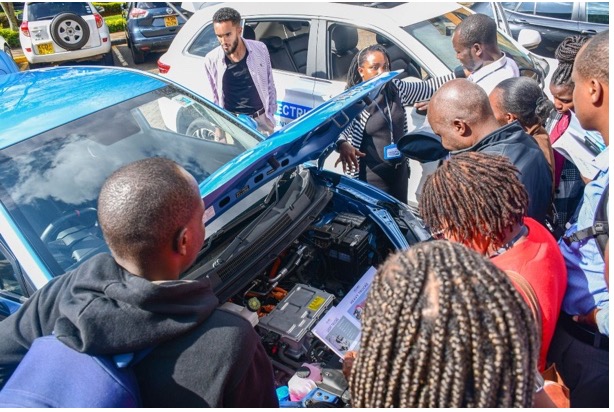
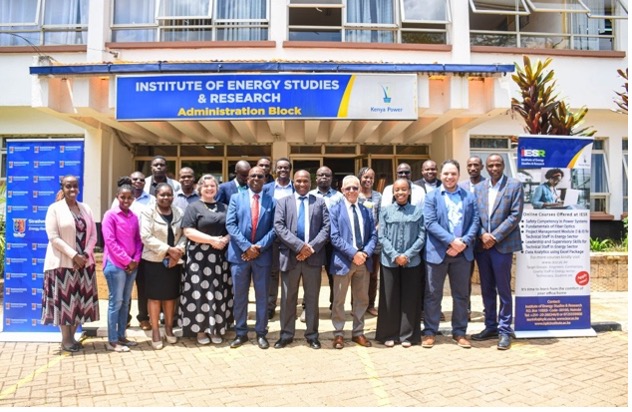
The online component was later complemented by a more advanced, in-person training held in Nairobi. This 4-day, in-person session provided 30 participants—including representatives from Keyna Power, the Kenyan Transport Ministry, the e-mobility industry, international development, and academia—with practical insights on different topics including interactions between the electricity grid and EV systems, EV safety and standards, charging infrastructure planning, and promoting equity and inclusion through e-mobility.

In-person training meetings in Nairobi, Kenya.
The second request asked for assistance in developing an EV grid impact assessment to identify areas across the electricity grid where investments might be needed to accommodate the current and future electricity demand from EVs (focusing on passenger cars and buses). Through Cenex, the ZEV-RRF platform developed an EV grid impact assessment tool. This tool offers government officials the ability to estimate the future impact of EV adoption on the national electricity grid, providing insights into projected electricity demand. It will inform future grid upgrades and strategic investments to ensure the grid can accommodate increasing EV penetration in the coming years. Following the development of the tool, training sessions were organized to ensure that Kenya Power and Strathmore University acquired the necessary competencies to apply it effectively going forward.
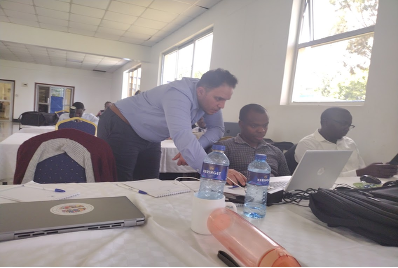
EV grid readiness tool training session
A lesson learned for other emerging markets
By signing the ZEV Declaration, emerging market countries position themselves as global leaders in the transition towards cleaner transportation systems and makes achieving these ambitious ZEV goals more feasible through assistance from the ZEV-RFF. It also demonstrates how coordinated international assistance can be effectively leveraged to achieve climate objectives and broader socio-economic development goals.
Signatory countries interested in applying for technical assistance can learn more about the ZEV-RRF here.