In just one week, governments, industry, and civil society will arrive in Antalya, Türkiye for the much-anticipated COP31. This convening follows a year in which the conversation has shifted from high-level commitment to implementation. While this is an interim year for the Global Stocktake and updates to Nationally Determined Contributions (NDCS), attention has turned to actionable pathways and the key mechanisms needed for real-world climate action.
Amidst a changing global landscape and rising fuel prices, governments are realigning their strategies towards electrification with a greater focus on affordability, sustainable supply chains, and energy security. Road transport sits at the intersection of all three, and the outcomes of this upcoming COP will help determine the role of road transport, and the zero-emission vehicle transition, in the broader push for global electrification and green industrial growth.
Progress since COP30: From mature to emerging markets
To build on existing initiatives and focus on implementation rather than new commitments, COP30’s Global Action Agenda brought together 100 plus Plans to Accelerate Solutions to advance key goals and targets across sectors. (See our COP 101 blog for more information on the Action Agenda.) Over the past year, dialogues at key touchpoints have focused on how to quickly, efficiently, and equitably scale the transition.
In June of this year at the Bonn Climate Change Conference, the incoming COP31 Presidencies, Türkiye and Australia, launched a global electrification target to raise the share of final energy demand met by electricity from just over 20% today to 35% by 2035.
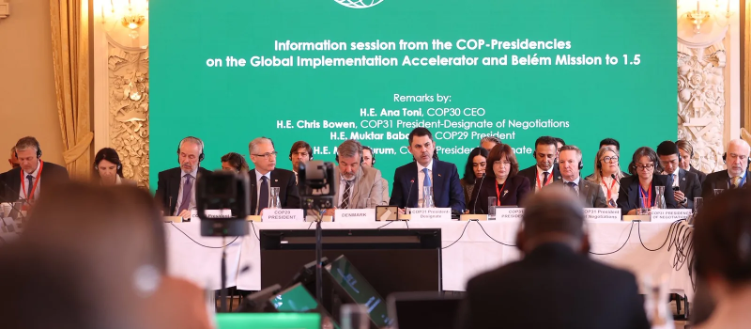
Photo courtesy of COP31 website: President-Designate Murat Kurum Calls for Global Electrification
This electrification goal comes on the backdrop of commitments made at previous climate summits. At COP28 in 2023, countries reached a consensus to work toward tripling renewable energy capacity and transitioning away from fossil fuels. The following year at COP29, governments and stakeholders endorsed initiatives to enhance energy storage and modernise electricity grids.
The COP31 Presidency views global electrification as core to translating previous commitments into economy-wide changes in energy consumption. This would imply replacement of technologies that directly burn fossil fuels with electric alternatives in sectors such as transport, industry, and buildings. Key focus areas include scaling efforts toward switching from gasoline and diesel to electric vehicles (EVs), replacing gas heating systems with heat pumps, and using electric furnaces in industrial processes.
The following September at Climate Week NYC, COP31 President-Designate Murat Kurum, Minister of Environment and Urban Planning for the Government of Türkiye, announced this year’s Action Agenda and highlighted how COP31 is not about creating new headings. The Minister added, “Its central purpose is to ensure that the decisions already taken are translated fully into action. More than that, it is about advancing a global process of action: moving beyond statements of intent and achieving real results.”
A shift towards green industrialization
Green industrialization evolved as a key driver and focus at COP30 in Brazil. Within this context, green industrialization refers to an economic growth strategy that transitions industrial production toward low-carbon energy, while also developing new clean energy technologies. The Belém Declaration for Global Green Industrialization has led to the evolution of the former Breakthrough Agenda process. The new and broader framework, known as the Global Green Industrialization Agenda (GGIA), continues the coordination and support offered through the sector breakthroughs to strengthen decarbonization across the highest emitting sectors.
The GGIA is a voluntary mechanism to support international collaboration on accelerating the deployment of clean technologies and solutions. Moreover, the platform advances green industrialisation in pursuit of climate, economic, and energy security objectives. Road transport is identified as a supporting driver, but not a priority sector. Electrifying transport is not to be overlooked, however, as ZEV adoption supports job creation, competitiveness, energy security, and domestic value creation for countries.
What can COP31 deliver for road transport?
To strengthen the global electrification target, the COP31 Presidency should consider focusing on practical outcomes that advance existing commitments. A few such efforts could include:
- Staying on course with existing ZEV targets and pledges: Maintain the direction toward 100% zero-emission vehicle sales, as outlined in the ZEV Declaration and Global Memorandum of Understanding on Medium- and Heavy-Duty Vehicles, and translate targets into credible implementation pathways.
- Emerging markets at the center: Ensure that international cooperation, finance, and technical assistance for emerging markets supports rapid growth in road transport electrification.
- Affordability becomes a global priority: Making ZEVs accessible and affordable across income groups and vehicle segments is crucial to strengthen this transition.
- Strengthening international collaboration: COP31 should become the climate summit where world leaders agree to advance cooperation on standards, trade, supply chains, financing, and knowledge-sharing.
The Presidency’s ’35 by 35’ target makes the integration of energy and transport as a key area of focus going into Antalya, both at the negotiation table and side events. It’s important to remember, however, that electrification is just one piece. Operationalizing NDCs through the ‘avoid-shift-improve’ framework offers the most potential impact for climate and health.